





.jpg)

Mountains of Mongolia
MONGOLIAN MOUNTAIN RANGES
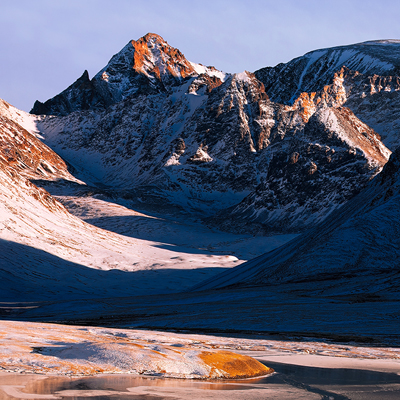
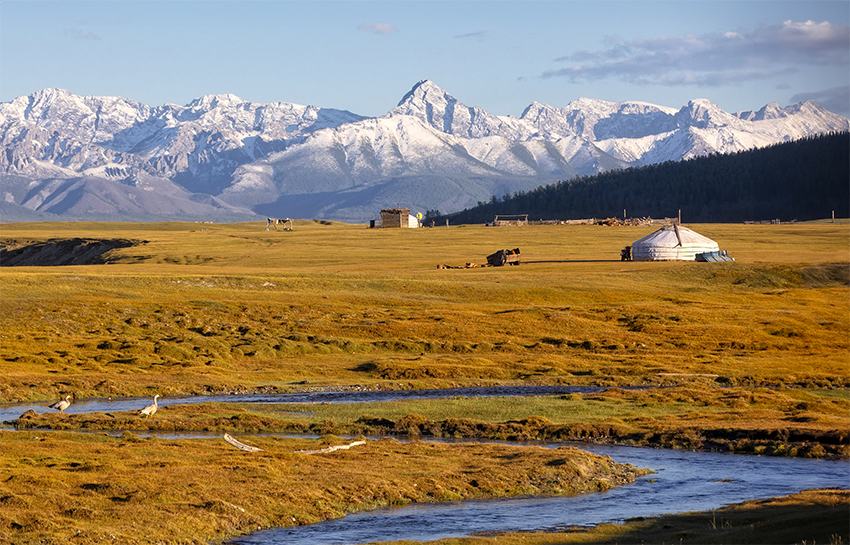
Mongolia's mountain ranges form a majestic tapestry across the vast landscape of this unique country. From the rugged peaks of the Altai Mountains in the west to the lush forests of the Khangai Mountains in the central region and the arid beauty of the Gobi-Altai range in the south, Mongolia's mountains showcase a diverse array of ecosystems and natural wonders.

Mongol Altai Mountains
The Altai Mountains, situated in western Mongolia, are renowned for their diverse terrain and rich biodiversity. This rugged range is characterized by high peaks, deep valleys, and vast glaciers. It's a popular destination for adventure seekers, offering opportunities for trekking, mountaineering, and exploring nomadic cultures.
Terrain Features:
1. High Peaks: The Altai Mountains are characterized by high peaks, with several towering above 4,000 meters (13,000 feet) in elevation. Mount Khüiten, the highest peak in Mongolia, reaches an altitude of 4,374 meters (14,350 feet).
2. Glaciers and Snowfields: The high elevations of the Altai Mountains support glaciers and permanent snowfields, which feed numerous rivers and streams in the region.
3. Deep Valleys and Gorges: The mountain range is crisscrossed by deep valleys and gorges, carved out by glaciers and rivers over millennia.
4. Plateaus and Alpine Meadows: In between the peaks, plateaus and alpine meadows can be found, providing vital grazing grounds for livestock and habitat for wildlife.
Flora:
1. Alpine Vegetation: Above the tree line, alpine vegetation dominates, consisting of low shrubs, grasses, and hardy flowering plants adapted to the harsh mountain environment.
2. Coniferous Forests: Lower elevations of the Altai Mountains are often covered by coniferous forests, including species such as Siberian pine, Siberian larch, and fir.
3. Subalpine Meadows: In the valleys and on the slopes, subalpine meadows bloom with a variety of wildflowers during the short summer months, attracting pollinators and herbivores.
Fauna:
1. Snow Leopard: The Altai Mountains are one of the last remaining strongholds of the elusive snow leopard, a critically endangered big cat species adapted to high-altitude habitats.
2. Argali Sheep: This is the world's largest wild sheep species and is found in the rugged terrain of the Altai Mountains.
3. Ibex: The Altai ibex, a species of wild goat, is well-adapted to the steep cliffs and rocky slopes of the mountains.
4. Golden Eagle: These majestic birds of prey are commonly found in the Altai Mountains, where they hunt for small mammals and birds.
5. Marmots: These large ground-dwelling rodents are abundant in the alpine meadows of the Altai, providing food for predators such as foxes and eagles.
Khangai Mountains
The Khangai Mountains, located in central Mongolia, are known for their varied terrain, rich biodiversity, and stunning landscapes are known for their lush forests, alpine meadows, and numerous rivers and lakes. This range is a haven for wildlife and is often referred to as the "Switzerland of Mongolia" due to its picturesque landscapes.

Terrain Features:
1. Rolling Hills: The Khangai Mountains are characterized by rolling hills and vast grasslands, interspersed with rugged rocky outcrops.
2. River Valleys: Numerous rivers and streams flow through the mountains, carving deep valleys and gorges as they meander through the landscape.
3. Alpine Plateaus: At higher elevations, the terrain levels out into alpine plateaus, where herds of livestock graze during the summer months.
4. Volcanic Activity: The Khangai Mountains have volcanic origins, and remnants of past volcanic activity can still be seen in the form of extinct volcanoes and lava flows.
Flora:
1. Grasslands: Much of the lower elevations of the Khangai Mountains are covered by vast grasslands, which provide grazing grounds for nomadic herders' livestock.
2. Mixed Forests: In some areas, especially in the foothills and sheltered valleys, mixed forests of coniferous and deciduous trees can be found. Species include Siberian pine, larch, birch, and aspen.
3. Alpine Meadows: Higher up, alpine meadows carpet the landscape during the summer months, bursting with a colorful array of wildflowers and grasses.
Fauna:
1. Mongolian Gazelle: These graceful antelopes are often found grazing in the grasslands of the Khangai Mountains, forming large herds during the migration season.
2. Red Deer: The Khangai Mountains are home to populations of red deer, which inhabit the forests and wooded areas of the region.
3. Siberian Marmot: These large ground-dwelling rodents are common in the alpine meadows of the Khangai Mountains, where they dig extensive burrow systems.
4. Wolves and Foxes: Predators such as wolves and foxes roam the mountains, preying on smaller mammals and scavenging on carrion.
5. Birdlife: The Khangai Mountains are home to a diverse array of bird species, including raptors such as eagles and falcons, as well as migratory birds that pass through the region during the spring and autumn.
The Khangai Mountains are not only biologically diverse but also culturally significant, as they are home to many nomadic herding communities whose livelihoods are intimately tied to the land and its resources.
Khentii Mountains
Khentii Mountains: Located in northeastern Mongolia, the Khentii Mountains are renowned for their pristine wilderness and rugged terrain. This remote region is home to diverse flora and fauna, including endangered species like the Siberian ibex and the snow leopard.

Terrain Features:
1. Mountain Ranges: The Khentii Mountains consist of several rugged mountain ranges, with peaks reaching heights of over 2,000 meters (6,500 feet) above sea level.
2. Forest-covered Hills: Much of the lower elevations of the Khentii Mountains are covered by dense forests, predominantly consisting of coniferous trees such as Siberian pine, Siberian larch, and spruce.
3. River Valleys and Gorges: The mountains are crisscrossed by numerous rivers and streams, which have carved deep valleys and gorges into the landscape over time.
4. Alpine Meadows: At higher elevations, alpine meadows dot the mountainsides, providing important grazing grounds for wildlife and livestock during the summer months.
5. Rocky Outcrops: Rocky outcrops and cliffs are common in the Khentii Mountains, providing habitat for various bird species and offering stunning vistas.
Flora:
1. Coniferous Forests: Coniferous forests dominate the lower elevations of the Khentii Mountains, with species such as Siberian pine, larch, and spruce being prevalent.
2. Deciduous Trees: Mixed with the conifers are deciduous trees like birch, aspen, and poplar, especially in areas where the forests transition to lower elevations.
3. Alpine Flora: Alpine meadows in the higher reaches of the mountains support a variety of wildflowers, grasses, and other alpine plants adapted to the harsh mountain environment.
Fauna:
1. Siberian Ibex: The Khentii Mountains are home to populations of Siberian ibex, a species of wild goat adapted to the steep cliffs and rocky terrain of the region.
2. Red Deer: These large herbivores inhabit the forests and meadows of the Khentii Mountains, feeding on vegetation and providing prey for predators.
3. Wolves and Lynx: Carnivores such as wolves and lynx roam the mountains, preying on smaller mammals like marmots, voles, and hares.
4. Birdlife: The Khentii Mountains support a diverse array of bird species, including raptors like eagles and falcons, as well as songbirds and waterfowl found along rivers and lakes.
5. Amphibians and Reptiles: Various amphibians and reptiles, such as frogs, toads, snakes, and lizards, can be found in the Khentii Mountains, particularly in wetland areas and along water bodies.
The Khentii Mountains are not only biologically diverse but also culturally significant, as they are considered sacred by many Mongolians and are associated with the birth and early life of Genghis Khan, the founder of the Mongol Empire.
Khuvsgul Mountains
The Khuvsgul Mountain Range, also known as the Khoridol Saridag or Khuvsgul Khairkhan, is a significant mountain range in northern Mongolia. It's situated near the eastern shore of Lake Khuvsgul, one of the largest and deepest freshwater lakes in Mongolia.
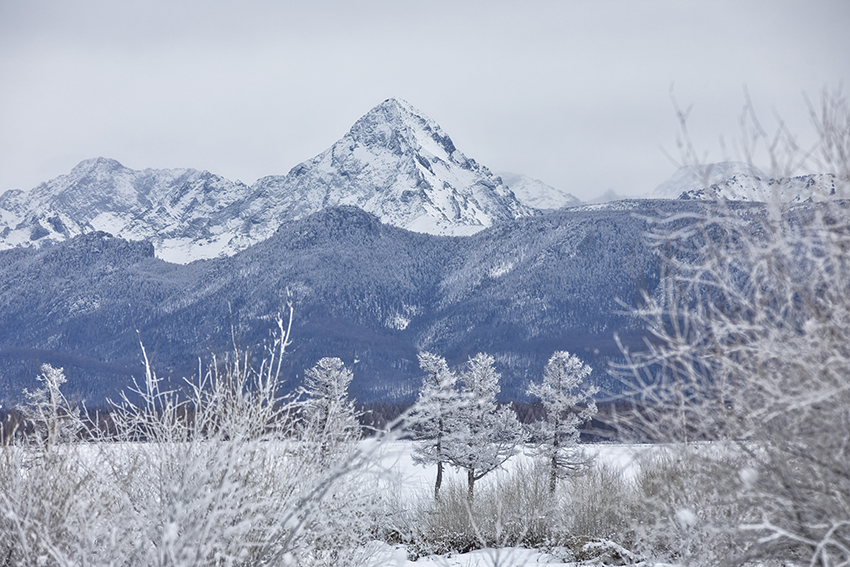
These mountains are part of the broader Sayan Mountain Range system, which extends into both Mongolia and Russia. The Khuvsgul Range is renowned for its stunning natural beauty, featuring rugged peaks, alpine meadows, and pristine forests. The area is a haven for outdoor enthusiasts, offering opportunities for hiking, camping, horseback riding, and wildlife viewing.
The Khuvsgul Mountain Range is not only a place of natural beauty but also holds cultural significance for the indigenous peoples of the region, including the Dukha (Tsaatan) reindeer herders. They have a deep connection to the land and its resources, and their traditional way of life is closely tied to the mountains and forests of the region
Terrain:
• The Khuvsgul Mountain Range is characterized by rugged terrain, with towering peaks, deep valleys, and sharp ridges.
• Glacial activity has sculpted much of the landscape, leaving behind U-shaped valleys, cirques, and moraines.
• Alpine meadows dot the higher elevations, providing grazing grounds for wildlife and supporting a variety of plant species.
• Numerous rivers and streams originate from the melting snow and glaciers, flowing through the valleys and contributing to the formation of Lake Khuvsgul.
Flora:
• The mountain range hosts a diverse array of plant life, adapted to various altitudes and microclimates.
• Coniferous forests, dominated by species like Siberian pine, Siberian fir, and larch, cover many slopes, especially at lower elevations.
•Above the tree line, alpine tundra vegetation prevails, with grasses, mosses, and lichens being common.
• The region is also home to several endemic plant species, adapted to the harsh mountain environment.
Fauna:
• The Khuvsgul Mountain Range supports a rich and diverse array of wildlife, including many species of mammals, birds, and other animals.
• Large mammals such as Siberian ibex, Siberian roe deer, moose, brown bear, and wolf inhabit the forests and mountainsides.
• Endangered species like the snow leopard and the argali sheep are known to roam these rugged slopes.
• The region is also a haven for birdwatchers, with species like the bearded vulture, golden eagle, Altai snow cock, and various species of falcons and owls being present.
•Lakes and rivers in the area are inhabited by fish species such as lenok trout and grayling, supporting both local wildlife and fishing activities.
Best hiking and trekking mountains in Mongolia
Khuiten Mountain
Khuiten Mountain - Altai Tavan Bogd Khuiten Mountain, the crowning jewel of Mongolia's Altai Tavan Bogd range, stands proud at an impressive altitude of 4,374 meters (14,350 feet). The journey to conquer its summit is an adventure that starts from the base camp, where travelers gear up for an unforgettable expedition across the expansive Potanin Glacier. As they traverse the icy expanse, the towering silhouette of Khuiten Mountain gradually looms closer, setting the stage for the challenge ahead.
Upon reaching the western mountainside of Khonog Tolgoi Mountain, climbers establish a temporary camp, immersing themselves in the rugged beauty of the Altai wilderness. Resting under the star-studded Mongolian sky, anticipation builds for the ascent that awaits at dawn. With the first light of day, usually around 4-5 am, climbers begin their arduous trek towards the summit.

The ascent unfolds amidst breathtaking panoramas of snow-capped peaks and glacier-carved valleys. Maneuvering around four distinct rock formations, climbers navigate steep inclines, relying on their physical prowess and mountaineering skills to overcome each obstacle. The route, though challenging, has garnered popularity in recent years, drawing adventurers seeking the ultimate thrill of scaling Mongolia's highest peak.
The optimal climbing window spans from May to September, coinciding with the milder weather conditions of Mongolia's brief summer. Despite the typical two-day ascent from base camp to summit, seasoned climbers accompanied by experienced guides can conquer Khuiten Mountain in as little as 12-13 hours, testament to both skill and determination in the face of nature's formidable obstacles.
Sutai Mountain
Ranked among the top three snow-capped peaks of the Mongol-Altai mountain range, Sutai Mountain stands as a formidable challenge to climbers seeking adventure in Mongolia's rugged wilderness. Rising majestically to an altitude that commands respect, this mountain offers not one, but two distinct routes to its lofty summit, each presenting its own set of challenges and rewards.
The first route, renowned for its unique features, takes climbers on an exhilarating journey across a leaf-shaped rock formation, where they encounter towering ice walls and navigate treacherous snow obstacles along the way. This path, though less traveled, offers a thrilling ascent for those seeking a true test of skill and endurance amidst the stark beauty of the Altai.

Alternatively, a more commonly used route winds its way through a series of smaller rocks, offering a less snowy path to the summit. While less technically demanding, this route still presents its own challenges, requiring climbers to navigate rugged terrain and overcome physical obstacles on their journey skyward.
Climbing Sutai Mountain is possible year-round, with each season offering its own unique set of challenges and rewards. While warmer days may be preferred for more comfortable climbing conditions, experienced mountaineers may find the allure of a winter ascent irresistible, drawn by the pristine beauty of the snow-covered landscape and the solitude of the mountains in their frozen splendor.
Must Mountain of Kharkhira Mountain Range
Standing tall as the crown jewel of the Kharkhira mountain range, Must Mountain commands attention with its soaring peaks and rugged beauty. At an impressive altitude of 4,037 meters (13,244 feet), it offers a challenging yet rewarding ascent for climbers seeking to test their skills amidst Mongolia's breathtaking landscapes.
The climbing season for Must Mountain spans from late May to early September, coinciding with the milder weather of Mongolia's short summer. However, climbers should be prepared for the challenges of ascending in one of Mongolia's coldest regions, as temperatures can fluctuate dramatically, and inclement weather can pose significant obstacles along the way.
Navigating the terrain of Must Mountain requires careful planning and preparation, as climbers must contend with steep slopes, rocky outcrops, and unpredictable weather conditions. Proper equipment, including sturdy boots, warm clothing, and ample supplies, is essential to ensure a safe and successful ascent.
Despite the challenges, the summit of Must Mountain offers unparalleled views of the surrounding landscape, with sweeping vistas of the Great Lakes Depression and the majestic peaks of the Kharkhira range stretching out as far as the eye can see. For climbers seeking adventure and exploration in Mongolia's untamed wilderness, Must Mountain promises an unforgettable journey to the top of the world.
Tsambagarav Mountain
Nestled amidst the rugged beauty of Mongolia's western provinces, Tsambagarav Mountain stands as a testament to the raw power and majesty of nature. Located between Bayan-Ulgii, Khovd, and Uvs provinces, this imposing peak offers a challenging yet rewarding ascent for climbers seeking adventure in one of Mongolia's most remote and untamed regions.
The climbing season for Tsambagarav Mountain typically extends from April to September, offering a narrow window of opportunity amidst the rugged terrain and unpredictable weather of Mongolia's western frontier. During this time, climbers can expect milder temperatures and clearer skies, making for more favorable climbing conditions.
Despite the challenges, the summit of Tsambagarav Mountain offers breathtaking views of the surrounding landscape, with sweeping vistas of the Turgen Mountains and the Great Lakes Depression stretching out in every direction. For climbers seeking adventure and exploration in Mongolia's untamed wilderness, Tsambagarav Mountain promises an unforgettable journey to the top of the world.
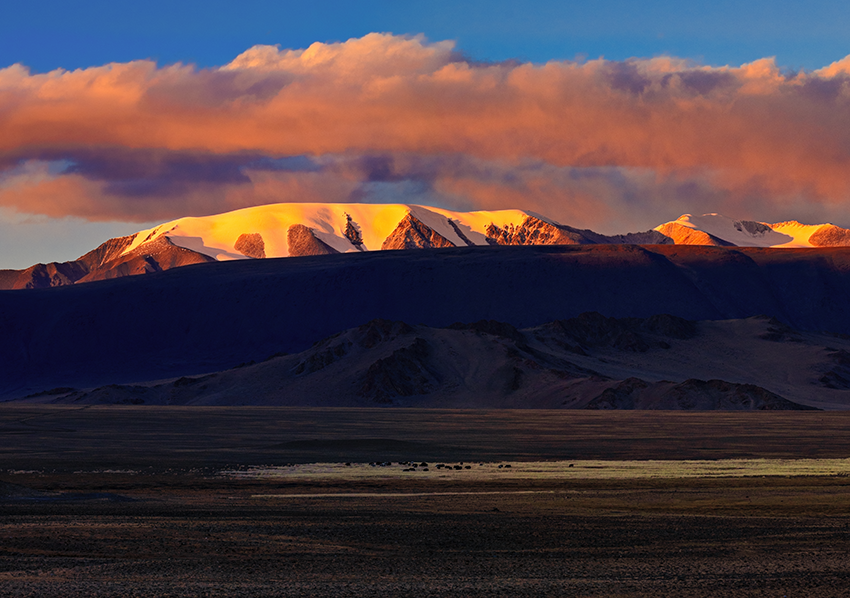
Tsagaan Shuvuut Mountain
Situated majestically north of Uureg Lake, Tsagaan Shuvuut Mountain beckons climbers with its relatively forgiving ascent route, promising a journey through Mongolia's pristine wilderness with stunning panoramic views of the Turgen Mountains and the vast expanse of the Great Lakes Depression.
The climbing season for Tsagaan Shuvuut Mountain extends from May to September, offering a window of opportunity amidst the milder weather conditions of Mongolia's brief summer. During this time, climbers can expect clearer skies and more stable weather patterns, ideal for a safe and enjoyable ascent.
The ascent itself is characterized by a gradual incline, making it accessible to climbers of varying skill levels. However, while the route may be forgiving, climbers must remain vigilant and prepared for the challenges of mountain terrain, including potential changes in weather and elevation.
Despite the relatively gentle ascent, the reward at the summit is nothing short of breathtaking, with sweeping vistas of the surrounding landscape stretching out as far as the eye can see. For climbers seeking an unforgettable journey through Mongolia's untamed wilderness, Tsagaan Shuvuut Mountain promises an adventure of a lifetime.
Munkh Saridag Mountain
Located north of the iconic Khuvsgul Lake, Munkh Saridag Mountain offers climbers a truly awe-inspiring experience amidst some of Mongolia's most breathtaking landscapes. With its year-round accessibility, this majestic peak promises adventurer an unforgettable journey to its summit, where panoramic views of the crystal-clear waters of Khuvsgul Lake and the rugged beauty of the surrounding wilderness await.
Regardless of the chosen route, climbers can expect to encounter a diverse array of landscapes, from lush forests to rugged alpine terrain, as they make their way to the summit. Along the way, breathtaking vistas of Khuvsgul Lake and the surrounding landscapes serve as a reminder of the unparalleled beauty of Mongolia's northern wilderness.
For climbers seeking an unforgettable adventure amidst some of Mongolia's most spectacular scenery, Munkh Saridag Mountain offers an experience like no other. Whether scaling its rocky slopes in the midst of summer or navigating its snow-covered trails in the heart of winter, the journey to the summit of Munkh Saridag Mountain promises an adventure of a lifetime.
Delgerkhaan Mountain
Delgerkhaan Mountain in the Khoridol Saridag Mountains, widely acclaimed as the most scenic peak in the Darkhad Valley, presents formidable challenges including river crossings and steep climbs. Climbing is feasible throughout the year, with careful consideration of snow conditions.
Asralt Khairkhan
Asralt Khairkhan Mountain in the Khentii Mountains provides winter climbing opportunities, boasting breathtaking views of the surrounding landscapes. Skiing and snowboarding are popular activities due to the region's abundant snowfall.


